
Logistics
The Role of Logistics Aggregators in Reducing Delivery Costs


%201.svg)
Lessons from global models like ShipStation, applied locally
In e-commerce, last-mile delivery is often the most expensive and operationally complex part of the supply chain. For merchants—especially SMEs—the challenge isn’t just moving parcels from point A to point B, but doing so affordably, reliably, and at scale.
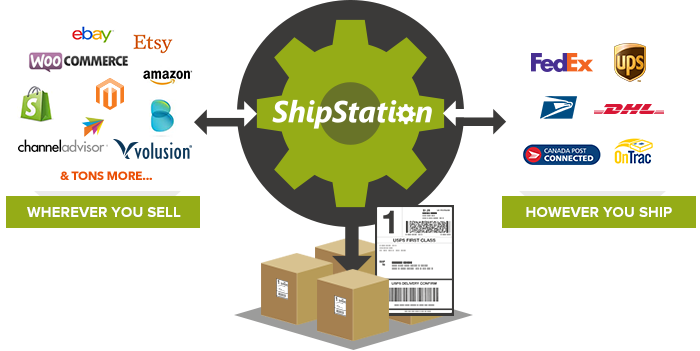
Globally, logistics aggregators like ShipStation, Shippo, and EasyPost have solved this problem by consolidating multiple courier services into one platform, giving sellers instant access to better rates, automated workflows, and real-time tracking.
The model has proven transformative in mature e-commerce markets. The question is: how can it work in Africa and other emerging markets where logistics infrastructure is more fragmented?
What a Logistics Aggregator Does
A logistics aggregator connects e-commerce sellers to a network of shipping providers through a single interface. The platform typically offers:
- Carrier Aggregation – Merchants can compare rates and services from multiple couriers.
- Volume Discounts – By pooling shipments from many sellers, the aggregator negotiates lower prices.
- Automation – Print labels, schedule pickups, and manage tracking in one dashboard.
- Integration – Seamless connection to marketplaces (Shopify, WooCommerce, Amazon, etc.).
The outcome? Lower delivery costs, higher efficiency, and better customer experience.
Why Aggregation Works
Delivery companies set rates based on volume and consistency. Small and medium sellers often can’t negotiate competitive pricing on their own. Aggregators, however, bundle thousands of parcels across merchants, reaching enterprise-level shipment volumes and unlocking rates that can be 30–50% cheaper.
In mature markets, this has:
- Reduced average shipping costs per parcel
- Increased courier competition (leading to better service levels)
- Enabled smaller merchants to compete with large players on delivery speed and price
The African Context: Opportunities and Challenges
Africa’s e-commerce and logistics sectors are highly fragmented:
- Many small, regional couriers operate without national reach.
- Pricing varies widely across routes and service levels.
- Few platforms offer true multi-carrier rate comparison and booking in one place.
An aggregator model could address these issues by:
- Pooling Demand Across SMEs – Unlocking rates previously available only to big retailers.
- Reducing the “Empty Van” Problem – Matching couriers with shipments to minimise unused capacity.
- Simplifying Cross-Border Shipments – Offering merchants a single interface for customs paperwork, duty calculations, and payment.
However, applying the ShipStation model locally requires solving for:
- Digital Integration Gaps – Many local couriers lack APIs or standardised tracking systems.
- Reliability & Service Quality – Aggregators must vet couriers and monitor performance.
- Cash-on-Delivery Complexity – Still a dominant payment method in many markets, requiring settlement reconciliation.
Lessons from ShipStation and Global Peers
- Platform First, Couriers Second – The aggregator’s real value is in software that’s easy to integrate and automates most manual work.
- Rate Transparency – Clear side-by-side comparisons drive adoption and trust.
- Merchant-Centric Features – Label printing, bulk order processing, and return workflows reduce merchant overhead.
- Scalable Integrations – Pre-built plugins for popular marketplaces accelerate onboarding.
These principles can be localised for African markets with additional features like:
- Cash-on-delivery management tools
- Localised address validation (to handle non-standard addresses)
- Integration with mobile money payment systems
Future Outlook for Local Aggregators
If implemented successfully, logistics aggregation could be as transformative for African e-commerce as mobile money has been for financial inclusion. Future opportunities include:
- Click-and-Collect Integration – Linking couriers with PUDO (Pick-Up Drop-Off) networks for cheaper deliveries.
- AI Route Optimisation – Reducing costs through predictive traffic and volume planning.
- Micro-Warehousing Partnerships – Using local shops as parcel consolidation points.
In time, local aggregators could evolve into full logistics platforms—handling warehousing, cross-border compliance, and even returns management—just as global players have done.
Conclusion
Global models like ShipStation have proven that logistics aggregation can cut delivery costs dramatically while improving efficiency. For Africa, the model holds even greater potential—not just to reduce prices, but to unify a fragmented logistics market, boost SME competitiveness, and unlock cross-border trade opportunities.
The key will be local adaptation: embracing cash-on-delivery realities, integrating mobile money, and building partnerships with regional couriers. Done right, logistics aggregators could become the backbone of affordable, scalable e-commerce delivery across the continent.


Get In Touch
team@ctxlabs.ai.
Connect with us:
Contact Us
We specialize in building scalable platforms across fintech, logistics, compliance, and AI. From core payment systems to intelligent risk engines and last-mile logistics networks, our expertise lies in delivering secure, user-centric, and high-impact digital infrastructure for emerging markets.

