
Fintech
Why Mobile Money Agents Are Africa’s Real ATM Network


%201.svg)
Introduction
In much of Africa, access to cash has never been as simple as walking up to the nearest ATM. Unlike Europe and the United States—where independent ATM operators place machines in convenience stores, petrol stations, and shopping malls—Africa’s ATMs are overwhelmingly tied to bank branches. This centralisation limits their reach and makes cash access a challenge for millions, especially in rural areas.
The reasons are both practical and economic. Standalone ATMs require high capital investment, constant cash replenishment, reliable connectivity, and, crucially, strong security. In regions where power cuts, poor road infrastructure, and security risks are common, running a viable independent ATM network is a tall order. Even in large cities, the cost of protecting and servicing these machines can outweigh the benefits.
Africa’s ATM Numbers Tell the Story
Across the continent, ATM coverage lags far behind global averages:
- Africa averages roughly 6 ATMs per 100,000 adults, compared to a global average of around 52.
- In Niger, the figure is closer to 2; in South Africa, which has one of the strongest ATM networks on the continent, there are just over 21,000 ATMs for a population of more than 60 million.
- By contrast, Europe and the US have extensive independent ATM networks, meaning machines are accessible well beyond bank premises.
This scarcity means that for many Africans, withdrawing cash from a bank-owned ATM is still a journey—sometimes a long one.
How Mobile Money Agents Closed the Gap
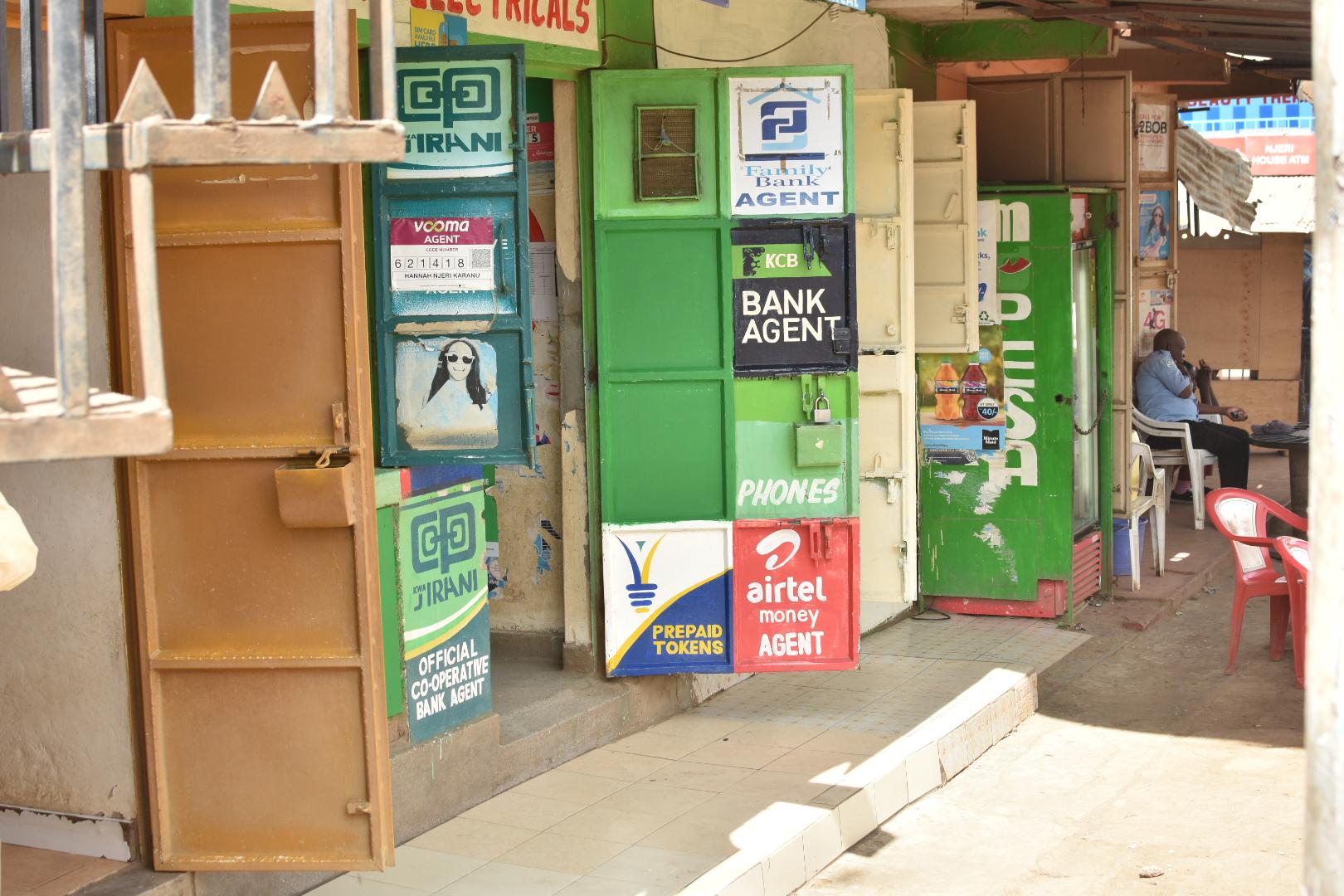
Enter mobile money agents, the backbone of agency banking. Instead of investing in costly machines, mobile money operators and banks have turned local shopkeepers, kiosks, and small business owners into human ATMs. These agents, equipped with a mobile device and basic training, can perform deposits, withdrawals, bill payments, and money transfers in minutes.
The scale is staggering. In Sub-Saharan Africa, there are an estimated 340 mobile money agents per 100,000 people, compared to just six ATMs. In Uganda alone, the network has grown to over 227,000 agents—far exceeding the number of physical bank branches and ATMs combined. This model works because it leverages existing businesses and community trust, creating financial touchpoints almost anywhere people live or work.
Why Independent ATMs Struggle, But Agents Thrive
In Africa, independent ATM deployment faces steep hurdles:
- Security – Machines are attractive targets for theft and vandalism, requiring expensive security measures.
- Infrastructure – Poor connectivity and unreliable power supply can cripple ATM uptime.
- Servicing Costs – Replenishing cash and maintaining machines in remote areas is logistically complex.
By contrast, agency banking avoids these issues. Cash for withdrawals comes from the agent’s own float, and deposits simply top up that float. Agents can operate even in low-connectivity environments using USSD codes or offline systems, making them far more adaptable.
The Future of Mobile Money Agents and Agency Banking
The next decade could see agents evolve from cash-in/cash-out points into full-service financial hubs. Some possible developments include:
- Expanded Financial Products – Offering microloans, savings accounts, and insurance directly at the agent level.
- Digital Identity & KYC Services – Using agents to onboard customers into the wider digital economy.
- E-commerce Fulfilment – Acting as local pick-up and drop-off points for online purchases.
- Government Disbursements – Becoming channels for welfare payments, subsidies, and tax collections.
In this vision, agents won’t just replace ATMs—they’ll surpass them in utility, becoming one-stop shops for financial and digital services in places where banks may never build branches.
Conclusion
Africa’s ATM network will likely never match Europe’s or America’s density, not because of a lack of demand, but because the infrastructure and economics don’t fit the independent ATM model. Mobile money agents have stepped into that gap and, in many cases, leapfrogged traditional cash access infrastructure entirely. As agency banking matures, these agents could become the cornerstones of inclusive finance—offering more than just cash, but a pathway to participate fully in the formal economy.


Get In Touch
team@ctxlabs.ai.
Connect with us:
Contact Us
We specialize in building scalable platforms across fintech, logistics, compliance, and AI. From core payment systems to intelligent risk engines and last-mile logistics networks, our expertise lies in delivering secure, user-centric, and high-impact digital infrastructure for emerging markets.

